
Anu Thomas Koikalethu
Queensland University of Technology
Bone & Tumour Engineering
Abstract
Breast cancer is the most frequently diagnosed cancer globally and the most prevalent cancer in women affecting millions each year. It is a highly heterogenous disease, making patient-specific information critical in the clinical decision-making process and in determining patient outcomes. This creates an urgent need for personalized breast cancer models.
The Bone and Tumour Engineering Group at Queensland University of Technology (QUT) focusses on developing three-dimensional (3D) cancer and bone models. Within the group, my research aims to develop personalised testing platforms for breast cancer using 3D models that effectively recapitulate the breast tumour microenvironment on a patient-specific level. These models will be used for evaluating drug sensitivity and combinational therapies that would yield vital information, thus aiding clinical decisions of patient treatments. Furthermore, bone mimicking models will be developed to investigate the dysregulated pathways between the breast and bone which results in metastasis.
Developing 3D models using patient-derived organoids and cells requires optimisation of scaffold materials, growth medium, and cell co-culture conditions to maintain the native cellular properties. To maintain the native properties of patient-derived cells, protocols for isolating cells from patient tissue and culture media for subsequent cell maintenance were optimised. Cellular phenotype was validated by immunofluorescent staining of cytokeratin, vimentin and hormone receptors. This demonstrated preservation of phenotype in of the cancer and fibroblastic cells of the tumour. The mechanical properties of substrates for mimicking the extracellular matrix (ECM) were characterised by compressive testing. Gelatin based hydrogels could be tuned to obtain a substrate with a dynamic range of Young’s moduli between 0.5 - 4 kPa, which most closely matched the stiffness of native breast tissue which is about 1 – 3kPa. The cytocompatibility of these materials have also been assessed by measuring the metabolic activity and viability of the cell-laden biomaterial. Significant differences in growth of organoids with regard to different ECM mimicking substrates were observed. These organoids were then subjected to drug testing, and the response was evaluated using a luminescent cell viability assay, revealing differences in drug sensitivities between patients, which further emphasised the need of tailored drug testing platforms.
We have also successfully engineered mineralised scaffolds containing cells of the bone microenvironment to mimic the bone microenvironment. The cell-laden scaffolds were characterised by evaluating the presence of bone microenvironment specific indicators through immunofluorescent staining, scanning electron microscopy and enzyme linked immunosorbent assay (ELISA), among several other assays. Efforts to automate these models, by using bioprinting technology, are ongoing. Preliminary experiments are being carried out to identify the ideal bioink for the platform.
From a young age, I was captivated by the workings of the human body. My first venture into cancer research began when I opened fifty tabs on Google, delved into articles from WebMD and Mayo Clinic about cancer, after a close family member’s diagnosis. This early experience ignited a commitment to cancer research. It continues to drive my passion to make a meaningful contribution to the fight against cancer and support those affected by it.
Kamal Ranadive. She was iconic for her work in cancer research which gave crucial insight into the role of viruses in cancer. As a pioneering woman scientist in India, she defied societal norms and elevated the status of women in science by creating a legacy. Even after her retirement, she trained women in healthcare and provided health and nutrition education in rural communities.
Inquisitive, Persistent and Compassionate
I speak five languages and am always working to add more to that list. I enjoy travelling and learning about different cultures and their history. When I’m not conducting experiments in the lab, you can find me carrying out culinary experiments in the kitchen.
Awards
1st Place
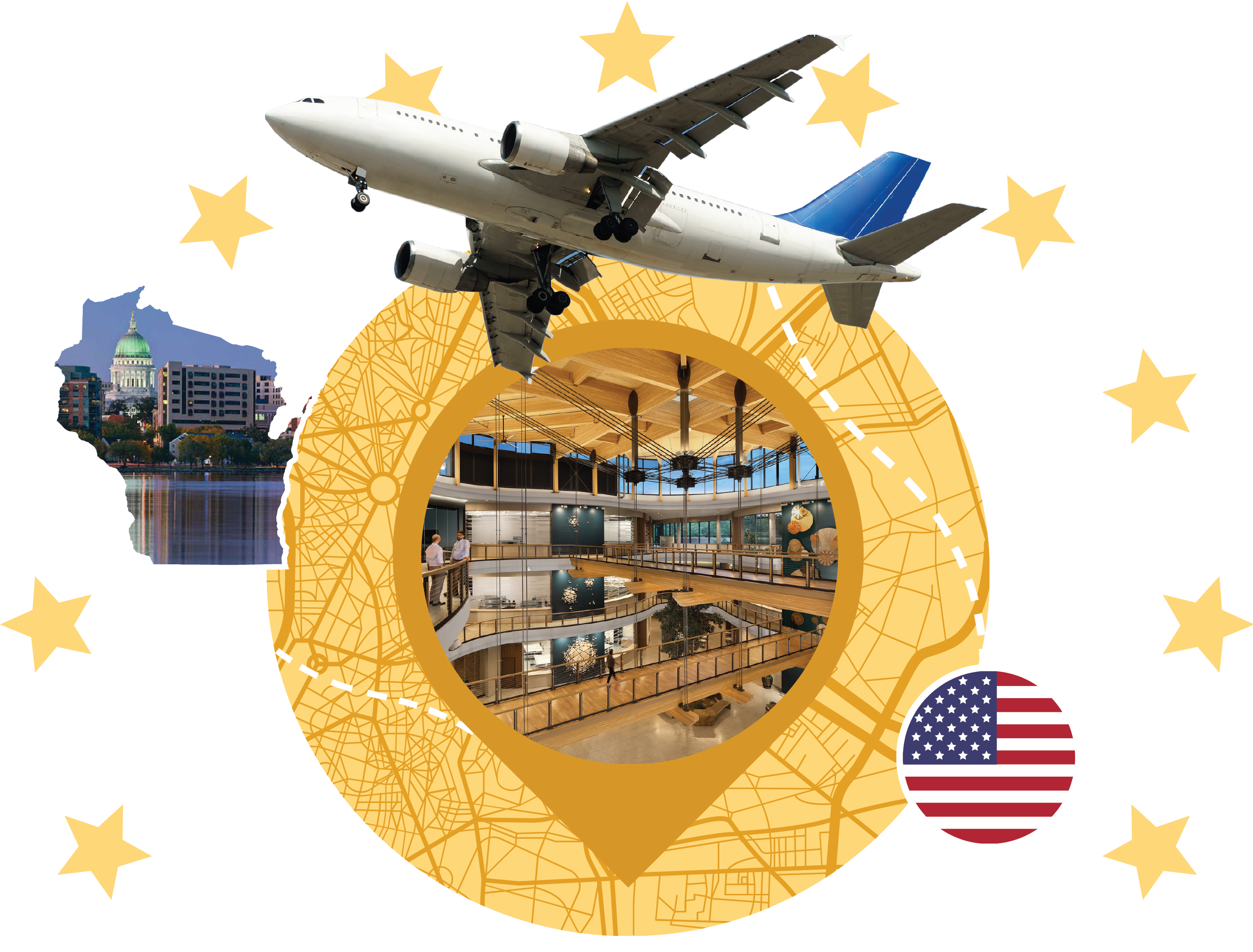
The Grand Prize recipient from each participating country wins a trip to Promega headquarters in Madison, WI USA to meet our R&D team, present their project and network with fellow award recipients.
Public votes are cast between 15 October - 15 November 2024 for each nominee. The candidate with the most votes wins.
Runner Up Awards
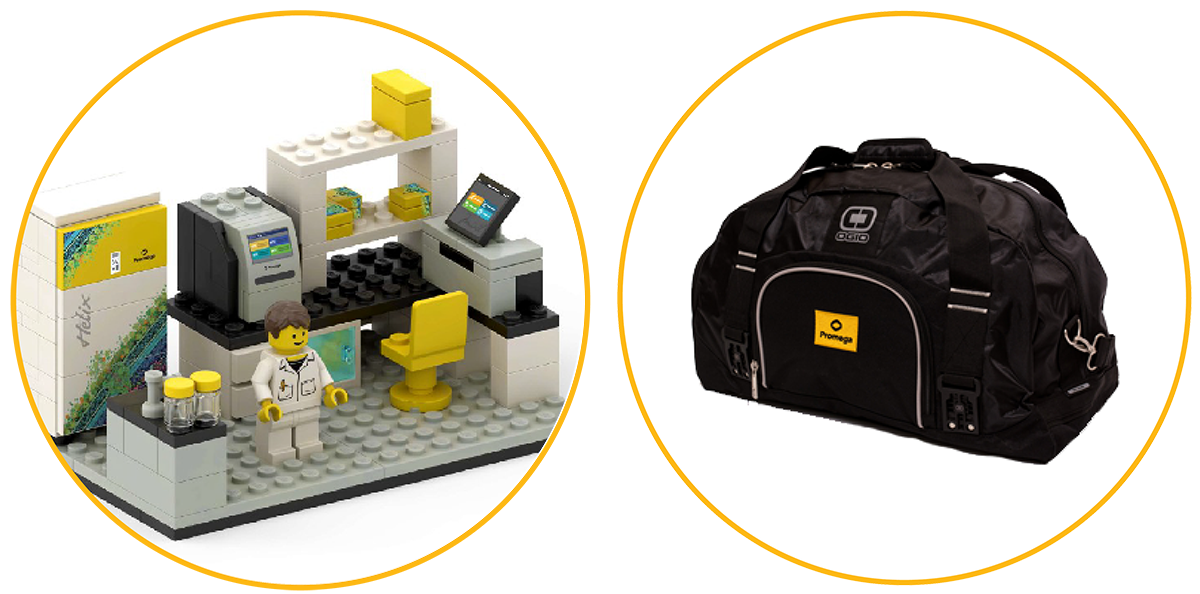
Four remaining Finalists will each receive a limited edition Promega Lab Set with LEGO® Elements and a Duffel Bag
Eligible individuals are not required to buy Promega products or pay any fees to participate. Employees of Promega Corporation and its subsidiaries and authorised distributors, and members of the immediate families of such employees, are not eligible.
The Promega Rising Researchers Award is not available in all geographic regions. Applicants should please check the Promega website, or with their Promega representative or authorised Promega distributor, for availability in their area. Void where prohibited by law.
The Promega Rising Researchers Award is available to individuals who are at least 18 years old and are a researcher or scientist that is enrolled in a life science PhD program as of the date their application for the Award is submitted. Examples of eligible life science research areas include, but are not limited to: biology, molecular biology, biotechnology, biochemistry, biomedical science, genetics, microbiology, pharmacology, neuroscience, ecology, immunology, and other similar research areas.
 Submit Your Registration Form
Tell us a little about yourself
No submissions will be accepted after June, 30th, 2024. Each Applicant will be notified if they were selected a Finalist no later than July 31st, 2024. Each Finalist will be notified if they were voted a Recipient no later than December 6th, 2024.
The following illustrates the information the applicant will be asked when submitting entry to the award program.
- Contact Information: First name, last name, birthdate, email address, telephone, job/role, institute, street address, city, state/province (as applicable), postal code/ZIP, country.
Complete the Application Form
Share your abstract and project impact
Please consider that some organization’s internal policy may not allow the applicant to receive incentives or that employer’s permission may need to be requested before participating in the contest.
Please be mindful that this abstract will be shared publicly through the Promega website and consider the level of information allowed by your organization.
 Finalists Selected
Top 5 Finalists from each participating Promega Branch
(Selected by Promega Representatives)
Finalists will be selected, through a vetting process involving Promega Branch employees (the “Selection Committee”) based on information submitted in the application form. Each recipient will be notified by e-mail at the sole discretion of Promega, no later than Wednesday, 31 July 2024. In the event a recipient cannot receive their prize for any reason, the prize shall be awarded to an alternate winner as determined by the Promega Selection Committee.
 Voting Opens
Voters must have an academic domain e-mail address
(Finalists can promote their videos to collect votes)
All of the Finalists selected by the Promega Selection Comittee will be asked to submit additional information such as a profile picture and answers to questions about their scientific background and interests. Finalists will also be asked to prepare a video up to 3 minutes long detailing their project.
This information will be made available in Promega’s website, along with a form that will allow other academic researchers to vote for one Finalist of their choice. The singular criteria for one to be able to vote will be to provide one's own academic email address, that is, an email with an academic domain, such as @harvard.edu, @stanford.edu, etc. Votes will be counted according to the voters’ country of residence, and one Finalist with the most votes per each participating Promega Branch (and the countries which they serve) will be deemed the Recipient for that Promega Branch. Therefore, the amount of Recipients corresponds to the amount of participating Promega Branches (and not the amount of participating countries).
Each Recipient will be notified by e-mail at the sole discretion of Promega, no later than Friday, December 6th, 2024.
 Recipients Announced
The finalist with the most votes from each Promega Branch wins
(Grand prize trip to Madison, WI to meet our R&D)
For costs regarding Recipient passport and US Visa, please verify with your local Promega Branch.
Additional expenses incurred by individual choice of each Recipient, such as activities and purchases outside of the visit schedule, will not be covered by Promega.
Additional awards for other Finalists are at the discretion of those Finalists’ local Promega Branch.
By accepting the Rising Researchers Award, the applicant will be asked to share information or data collected for marketing or commercial purposes. Specifically, winners agree to:
- Share stories from their research with Promega in the months following them receiving the award.
- Support promotional activities at Promega’s request for 12 months following accepting the award, which could include, but is not limited to, interviews, webinar presentations, website story features, videos, photoshoots, blogging, data sharing, and/or presenting at conferences or seminars.
This content will be shared on the Promega website (www.promega.com), the Promega blog (www.promegaconnections.com) and Promega social media accounts including Facebook, Instagram, LinkedIn and Twitter.
Recipients must acknowledge Promega in scientific publication(s) authored by the award recipient related to the research performed and supported by the award. A detailed consent form will be provided that allows Applicants to choose which information they are willing to share and though which channels.
In case of a dispute regarding the identity of the person submitting an online entry, the entry will be deemed to be submitted by the person in whose name the e-mail account is registered. The recipient may be required to provide evidence that they are the authorised account holder of the e-mail address associated with the selected entry. Return of any award notification as undeliverable will result in forfeiture of the prize.
Entry information shall be the property of Promega. No prize transfer or cash redemption will be permitted. No prize substitution will be permitted, except by the sole discretion of Promega, in which case a prize of comparable or greater value may be awarded.
Promega reserves the right to substitute any award of equal or greater value or to cancel, suspend, and/or modify the award at its sole discretion.
By participating, applicants agree to abide by and be bound by the rules and decisions of Promega which shall be final in all respects relating to this Rising Researchers Award, including without limitation the interpretation of this rule.
Participants agree to release, discharge and hold harmless Promega, and their subsidiaries, affiliates, officers, directors, agents, representatives, and respective employees from any and all claims, charges, injuries, liability, losses and/or damages of any kind resulting from or arising out of participation in the Rising Researchers Award and/or the acceptance, use, misuse or possession of any products received through the Rising Researchers Award. Recipients of this award will be ineligible for future Rising Researchers Awards.