
Elahe Minaei
University of Wollongong
Abstract
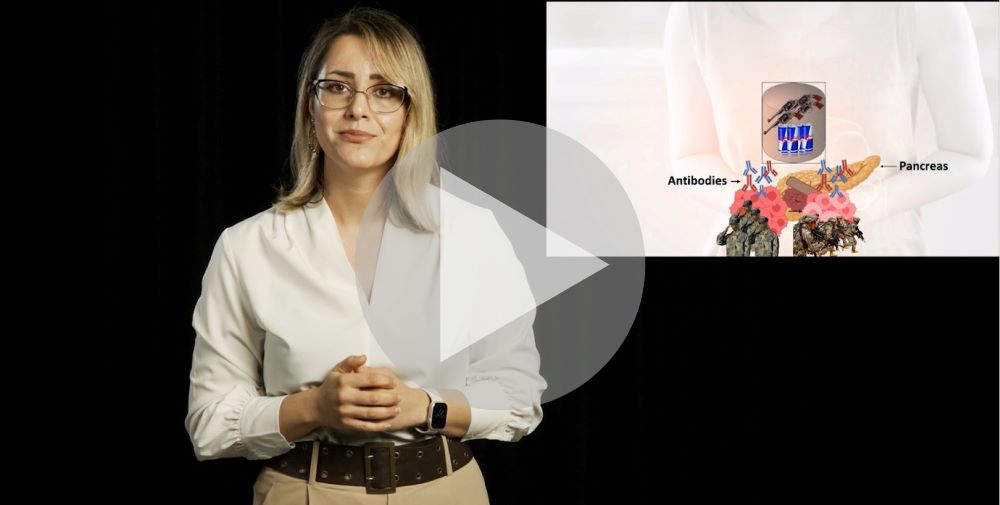
Despite promising results in the treatment of many cancers with immune checkpoints inhibitors (ICIs) like anti-PD1, pancreatic cancer (PC) remains insensitive to immunotherapy due to its immunosuppressive microenvironment. While evidence suggests that chemotherapy sensitises tumours to immunotherapy by causing immunogenic cell death and promoting T cell activation, it has not enhanced the efficacy of ICIs in PC. Combining chemotherapy with ICIs and other immune priming agents like anti-CD40 hasn't shown significant treatment enhancement due to suboptimal dosing to avoid immune-related adverse events. We investigated chemotherapy's effect on immune gene expression in PC and its stroma to assess its potential combination with immunotherapy in PC. Subsequently, we evaluated the safety and efficacy of a biodegradable polymeric implant in delivering anti-PD1 and anti-CD40 in a pancreatic mouse model compared to systemic administration, all in the presence of chemotherapy.
Materials & Method
- Gene expression profiling was conducted using the Immune Profiling Panel (NanoString Inc) on RNA isolated from human pancreatic stromal and tumour FFPE specimens from treatment-naïve (TN=3) or neoadjuvant chemotherapy-treated (NAC=3) patients.
- PCL capsules were fabricated via pultrusion, with inner alginate containing αCD40 and/or αPD1 fabricated using a 3D bio-printer and inserted into capsules to form the implant.
- Implants containing αCD40+αPD1 or empty implants were inserted into C57BL/6 mice with Luc-tagged KPC subcutaneous tumours for local treatment (LT) and control groups, respectively. Anti-tumour efficacy was assessed by comparing tumour growth via bioluminescence imaging with a group receiving fractionated systemic treatment (ST) with αCD40+αPD1. LT and ST groups received systemic chemotherapy (Gemcitabine + Nab-paclitaxel). Each cohort consisted of 10 mice.
- Immune system activation was analysed using flow cytometry on tumour-draining lymph nodes (TDLN) and spleens of sacrificed mice after the last treatment (early sacrifice). LEGENDplex cytokine assay was performed on collected plasma at early (day 11) and late (day 22) sacrifices.
- Pre- and post-study loading capacity of implants was assessed via SDS page to determine release profiles.
Results & Discussion
- In both tumour and stromal tissue, genes associated with antigen processing and T cell function (CD8, CD3, IL2R, HLA-DR) were upregulated in patients who underwent neoadjuvant chemotherapy (NAC) compared to those who were treatment-naïve (TN) (P < 0.05). There was a higher abundance of cytotoxic T lymphocytes (CTLs) in NAC compared to TN, indicating the immunostimulatory effect of chemotherapy in PC.
- The group receiving local treatment was the only one with no evidence of metastasis. Radiance intensity was significantly lower in LT compared to ST and the control group (P = 0.02 and 0.0002, respectively), demonstrating the efficacy of localised treatment in restraining tumour growth compared to systemic therapy.
- In the early sacrifice cytokine assay, inflammatory cytokines such as GM-CSF, IFNB, and IL-23 were elevated in the ST group compared to LT, leading to T cell activation in the tumour-draining lymph nodes (TDLN) marked by a significantly higher percentage of CD8+PD1+ cells compared to LT. Conversely, the proportion of LY6C- M1 anti-tumour macrophages was significantly higher in the lymph nodes and spleen of LT compared to ST, while the LY6C+ M1 pro-tumour macrophages were significantly higher in ST compared to LT. Late cytokine results indicated similar levels of inflammatory cytokines in both treatment groups, including a significant increase in IL-23 in both LT and ST compared to the control. There were higher levels of other activating cytokines such as the IL1 family and IFNB in LT compared to ST, suggesting a late and prolonged effect of LT due to a gradual release profile of the implantable device. This was confirmed by analysing the release profile of implants at the early and late stages of the study - showing that 17% and 8% of the antibodies were still present in the implant, respectively.

Awards
1st Place
The Grand Prize recipient from each participating country wins a trip to Promega headquarters in Madison, WI USA to meet our R&D team, present their project and network with fellow award recipients.
Public votes are cast between 15 October - 15 November 2024 for each nominee. The candidate with the most votes wins.
Runner Up Awards
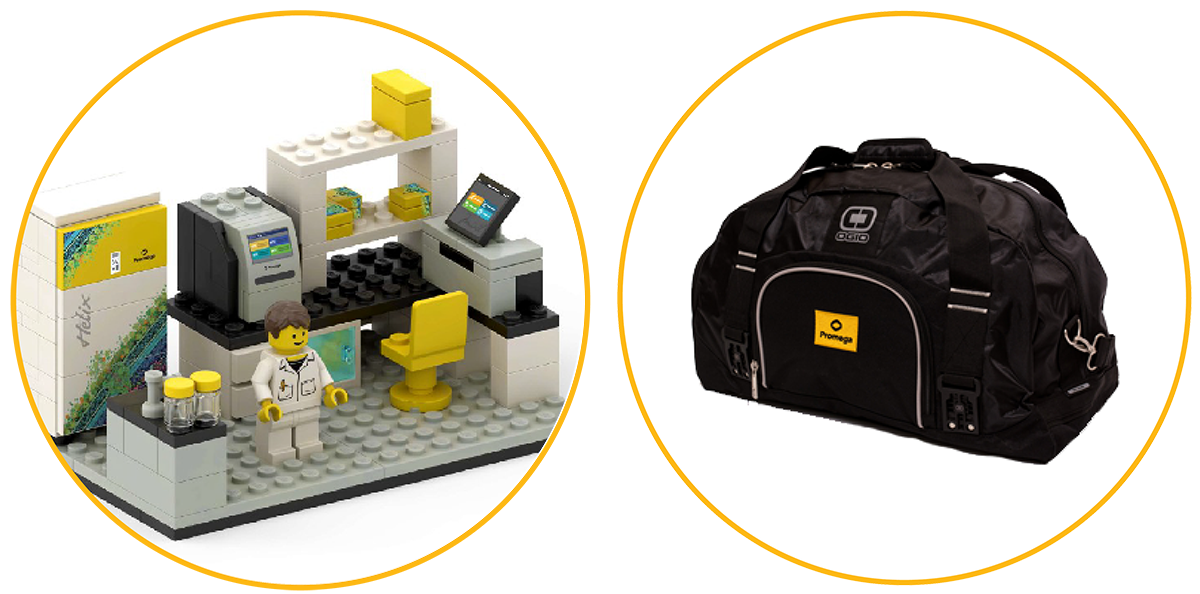
Four remaining Finalists will each receive a limited edition Promega Lab Set with LEGO® Elements and a Duffel Bag
Eligible individuals are not required to buy Promega products or pay any fees to participate. Employees of Promega Corporation and its subsidiaries and authorised distributors, and members of the immediate families of such employees, are not eligible.
The Promega Rising Researchers Award is not available in all geographic regions. Applicants should please check the Promega website, or with their Promega representative or authorised Promega distributor, for availability in their area. Void where prohibited by law.
The Promega Rising Researchers Award is available to individuals who are at least 18 years old and are a researcher or scientist that is enrolled in a life science PhD program as of the date their application for the Award is submitted. Examples of eligible life science research areas include, but are not limited to: biology, molecular biology, biotechnology, biochemistry, biomedical science, genetics, microbiology, pharmacology, neuroscience, ecology, immunology, and other similar research areas.
 Submit Your Registration Form
Tell us a little about yourself
No submissions will be accepted after June, 30th, 2024. Each Applicant will be notified if they were selected a Finalist no later than July 31st, 2024. Each Finalist will be notified if they were voted a Recipient no later than December 6th, 2024.
The following illustrates the information the applicant will be asked when submitting entry to the award program.
- Contact Information: First name, last name, birthdate, email address, telephone, job/role, institute, street address, city, state/province (as applicable), postal code/ZIP, country.
Complete the Application Form
Share your abstract and project impact
Please consider that some organization’s internal policy may not allow the applicant to receive incentives or that employer’s permission may need to be requested before participating in the contest.
Please be mindful that this abstract will be shared publicly through the Promega website and consider the level of information allowed by your organization.
 Finalists Selected
Top 5 Finalists from each participating Promega Branch
(Selected by Promega Representatives)
Finalists will be selected, through a vetting process involving Promega Branch employees (the “Selection Committee”) based on information submitted in the application form. Each recipient will be notified by e-mail at the sole discretion of Promega, no later than Wednesday, 31 July 2024. In the event a recipient cannot receive their prize for any reason, the prize shall be awarded to an alternate winner as determined by the Promega Selection Committee.
 Voting Opens
Voters must have an academic domain e-mail address
(Finalists can promote their videos to collect votes)
All of the Finalists selected by the Promega Selection Comittee will be asked to submit additional information such as a profile picture and answers to questions about their scientific background and interests. Finalists will also be asked to prepare a video up to 3 minutes long detailing their project.
This information will be made available in Promega’s website, along with a form that will allow other academic researchers to vote for one Finalist of their choice. The singular criteria for one to be able to vote will be to provide one's own academic email address, that is, an email with an academic domain, such as @harvard.edu, @stanford.edu, etc. Votes will be counted according to the voters’ country of residence, and one Finalist with the most votes per each participating Promega Branch (and the countries which they serve) will be deemed the Recipient for that Promega Branch. Therefore, the amount of Recipients corresponds to the amount of participating Promega Branches (and not the amount of participating countries).
Each Recipient will be notified by e-mail at the sole discretion of Promega, no later than Friday, December 6th, 2024.
 Recipients Announced
The finalist with the most votes from each Promega Branch wins
(Grand prize trip to Madison, WI to meet our R&D)
For costs regarding Recipient passport and US Visa, please verify with your local Promega Branch.
Additional expenses incurred by individual choice of each Recipient, such as activities and purchases outside of the visit schedule, will not be covered by Promega.
Additional awards for other Finalists are at the discretion of those Finalists’ local Promega Branch.
By accepting the Rising Researchers Award, the applicant will be asked to share information or data collected for marketing or commercial purposes. Specifically, winners agree to:
- Share stories from their research with Promega in the months following them receiving the award.
- Support promotional activities at Promega’s request for 12 months following accepting the award, which could include, but is not limited to, interviews, webinar presentations, website story features, videos, photoshoots, blogging, data sharing, and/or presenting at conferences or seminars.
This content will be shared on the Promega website (www.promega.com), the Promega blog (www.promegaconnections.com) and Promega social media accounts including Facebook, Instagram, LinkedIn and Twitter.
Recipients must acknowledge Promega in scientific publication(s) authored by the award recipient related to the research performed and supported by the award. A detailed consent form will be provided that allows Applicants to choose which information they are willing to share and though which channels.
In case of a dispute regarding the identity of the person submitting an online entry, the entry will be deemed to be submitted by the person in whose name the e-mail account is registered. The recipient may be required to provide evidence that they are the authorised account holder of the e-mail address associated with the selected entry. Return of any award notification as undeliverable will result in forfeiture of the prize.
Entry information shall be the property of Promega. No prize transfer or cash redemption will be permitted. No prize substitution will be permitted, except by the sole discretion of Promega, in which case a prize of comparable or greater value may be awarded.
Promega reserves the right to substitute any award of equal or greater value or to cancel, suspend, and/or modify the award at its sole discretion.
By participating, applicants agree to abide by and be bound by the rules and decisions of Promega which shall be final in all respects relating to this Rising Researchers Award, including without limitation the interpretation of this rule.
Participants agree to release, discharge and hold harmless Promega, and their subsidiaries, affiliates, officers, directors, agents, representatives, and respective employees from any and all claims, charges, injuries, liability, losses and/or damages of any kind resulting from or arising out of participation in the Rising Researchers Award and/or the acceptance, use, misuse or possession of any products received through the Rising Researchers Award. Recipients of this award will be ineligible for future Rising Researchers Awards.